
For Limited Partners, macro-volatility often arrives as a "black box." When energy prices swing on renewed geopolitical tensions, the critical question isn’t just whether your portfolio is exposed, but which managers are proactively defending your returns.
CEPRES Portfolio Management provides LPs with the look-through transparency required to prove resilience across a diversified private markets program.
Beyond the Fund-Level Blur
Standard reporting often masks operational reality behind lagged NAVs. CEPRES allows you to see the ground truth of your capital by identifying exactly how energy cost-push inflation translates to earnings across your entire global footprint—normalized across all GPs and vintages.
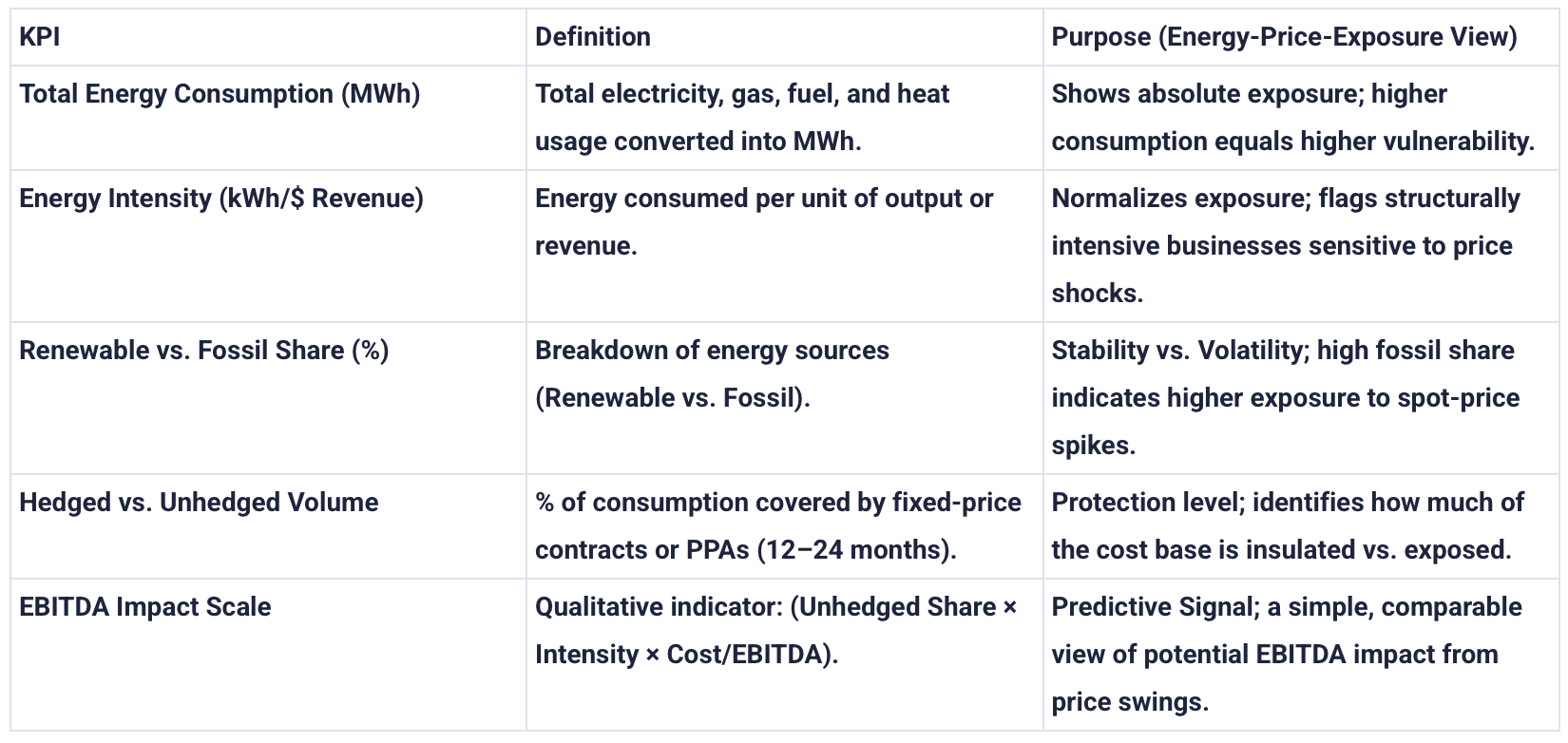
The Framework: From KPIs to EBITDA Impact
To translate energy exposure into financial relevance, CEPRES utilizes a robust yet streamlined KPI framework. This allows assets to be compared and "risk-scored" without the need for exhaustive bottom-up modeling.
Steer with Conviction: Leading Indicators vs. Lagged Data
By focusing on these operational leading indicators, LPs can move from a reactive posture to a proactive steering role:
Anticipate NAV Impacts: Identify pressure points months before they manifest in quarterly reports. This foresight allows for more accurate liquidity planning and proactive dialogue with GPs.
Identify "Natural Resistors": Use the EBITDA Impact Scale to highlight which businesses are naturally insulated and where targeted mitigation—such as accelerating renewable transitions—will matter most.
Objective Manager Benchmarking: Use standardized signals to verify GP narratives. Move from "trusting the GP" to "verifying the data," ensuring your managers are actively mitigating margin compression rather than just riding the market.
The Bottom Line: You can’t control global energy markets, but you can control your transparency. Use CEPRES to ensure your portfolio isn’t just surviving volatility—but is structured to outpace it.